
Learn how to improve aim in Free Fire with beginner-friendly tips for sensitivity, crosshair placement, headshots, movement, and practice.
How to Improve Aim in Free Fire
Improving your aim in Free Fire takes practice, the right sensitivity settings, and better control over your crosshair. If you often miss enemies, struggle to land headshots, or lose close-range fights, a few simple changes can help you become more accurate.
Battle Royale Game: What Is It, How Does It Work, Features, Rules & More
In this beginner-friendly guide, you will learn how to improve aim in Free Fire, adjust your controls, practise headshots, and develop better shooting habits without relying on cheats or third-party tools.
1. Choose the Right Sensitivity Settings
Sensitivity affects how quickly your aim moves when you swipe across the screen. If it is too low, turning toward an enemy may feel slow. If it is too high, your crosshair may move past the target.
To find a suitable setup:
- Start with your current sensitivity settings.
- Enter the Training Ground and practise aiming at stationary targets.
- Increase or decrease sensitivity gradually.
- Test your settings against moving targets.
- Keep the settings that give you consistent control.
Avoid copying another player’s sensitivity settings without testing them. Screen size, touch response, device performance, and personal playing style can all affect what feels comfortable.
2. Keep Your Crosshair at Enemy Head Level
Crosshair placement is one of the most useful skills for improving aim.
Many beginners keep their crosshair pointed at the ground while running. When an enemy appears, they must move their aim upward before shooting, giving the opponent more time to react.
Instead:
- Keep your crosshair around the height of an enemy’s head when moving through an area.
- Look toward likely enemy positions before entering open spaces.
- Practise moving between targets without making large, unnecessary swipes.
- Adjust your crosshair as you move around corners and obstacles.
Good crosshair placement reduces the amount of adjustment needed when a fight begins.
3. Practise Headshots with Controlled Drag
Headshots can deal more damage than body shots, depending on the weapon and game mechanics. However, trying to drag your aim upward too aggressively can cause you to miss completely.
To practise controlled drag aiming:
- Enter the Training Ground.
- Aim near the upper body of a stationary target.
- Fire while making a small, controlled upward swipe.
- Observe where your shots land.
- Repeat the movement slowly before increasing your speed.
The required movement depends on your sensitivity, weapon, and control layout. Focus on consistency rather than trying to perform fast headshot movements immediately.
4. Learn the Difference Between Close-Range and Long-Range Aim
You should not approach every fight in the same way.
Close-range fights: Keep your crosshair near the opponent and practise tracking their movement. Use controlled swipes and avoid moving your aim too far beyond the target.
Mid-range fights: Focus on tracking and firing in controlled bursts when appropriate for your weapon.
Long-range fights: Take more time to aim, account for weapon recoil, and avoid firing continuously when your shots become inaccurate.
Practise with the weapons you use most often. Different weapon types have different recoil patterns, firing rates, and effective ranges.
5. Use a Comfortable Control Layout
Your control layout affects how easily you can aim, shoot, move, and use other actions during combat.
A good layout should let you:
- Move without losing control of your aim.
- Reach the fire button comfortably.
- Use essential controls without accidental presses.
- Maintain a comfortable grip on your device.
Do not change your entire HUD layout at once. Adjust one control at a time, practise with it, and keep the change only if it improves your performance.
6. Control Recoil Instead of Spraying Continuously
Recoil can cause bullets to move away from your intended target, especially during sustained firing.
To improve control:
- Learn how your preferred weapons behave when firing.
- Practise short bursts at medium and long distances when appropriate.
- Make small corrections instead of large, sudden movements.
- Avoid holding the fire button continuously when accuracy matters.
Some weapons are easier to control than others. Choose weapons that match your current skill level and practise with them regularly.
7. Improve Aim While Moving
Standing still can make you an easier target, but moving too much while shooting can also make it harder to control your aim.
Practise combining movement and shooting in the Training Ground. Learn to keep your crosshair near the target while changing direction, and avoid random swipes that take your aim away from the opponent.
During real matches, use cover and reposition when necessary. Aim is important, but positioning and decision-making also affect the outcome of a fight.
8. Practise in the Training Ground Every Day
Regular practice is more useful than changing settings repeatedly without a clear goal.
Try this simple 10-minute routine:
- 2 minutes: Aim at stationary targets and practise crosshair placement.
- 3 minutes: Practise controlled headshot movements.
- 2 minutes: Track moving targets.
- 3 minutes: Practise shooting with your preferred weapons at different ranges.
Focus on one weakness during each session. For example, spend more time on tracking if you frequently miss moving enemies.
You can gradually increase the practice time as your skills improve.
9. Review Your Mistakes After Every Match
When you lose a gunfight, consider why it happened instead of blaming your sensitivity settings immediately.
Ask yourself:
- Was my crosshair too low?
- Did I start shooting before aiming properly?
- Did recoil make my shots inaccurate?
- Was the opponent too far away for my weapon?
- Did I expose myself without using cover?
Identifying the cause helps you choose what to practise next.
10. Avoid Common Aim-Improvement Mistakes
Beginners often slow their progress by making too many changes at once.
Avoid these mistakes:
- Changing sensitivity after every match.
- Copying professional players’ settings without testing them.
- Focusing only on headshots and ignoring accuracy.
- Shooting continuously at distant enemies.
- Ignoring recoil and weapon range.
- Expecting instant results without regular practice.
- Using cheats or unauthorised tools that can compromise account security or violate game rules.
Build your skills through legitimate practice and consistent gameplay.
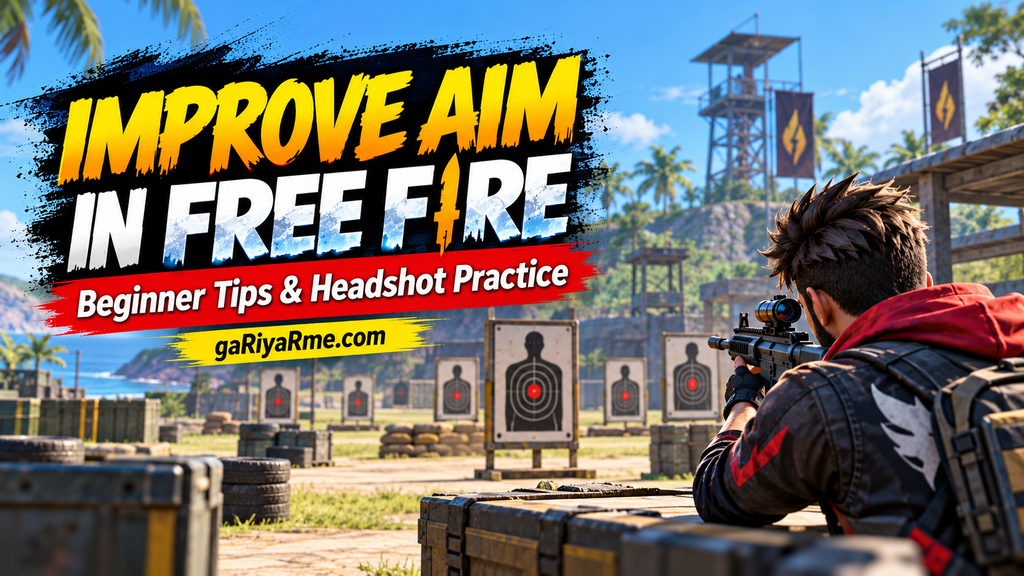
To improve aim in Free Fire, start with comfortable sensitivity settings, keep your crosshair near enemy head level, practise controlled headshot movements, and learn how different weapons behave. Spend a few minutes in the Training Ground regularly and review your mistakes after matches.
Free Fire Male Character AI Prompts – Transform Your Photos into In-Game Heroes
You do not need to change every setting or copy another player’s configuration. Focus on one skill at a time, practise consistently, and build a setup that works for you.
FAQ
1. How can I improve aim in Free Fire as a beginner?
Practise regularly in the Training Ground, use comfortable sensitivity settings, keep your crosshair near head level, and learn to control recoil.
2. Which sensitivity is best for Free Fire headshots?
There is no single best sensitivity for every player. Start with your current settings and adjust them gradually based on your device, control layout, and aiming consistency.
3. How do I get more headshots in Free Fire?
Practise crosshair placement and controlled upward swipes. Begin with stationary targets before practising against moving targets.
4. How long should I practise aiming in Free Fire?
Beginners can start with 10 minutes of focused practice per day and adjust the duration as needed.
5. Why do I miss shots even when my crosshair is on the enemy?
Movement, recoil, weapon characteristics, distance, and timing can affect accuracy. Practise tracking targets and learn how your preferred weapons behave.
6. Can I improve my Free Fire aim without changing sensitivity?
Yes. Crosshair placement, recoil control, movement, positioning, and regular practice can improve your aim even if you keep your current sensitivity.
Leave a Reply