
Learn what an FPS game is, what FPS stands for, its main types and features, and popular first-person shooter game examples.
What Is an FPS Game?
An FPS game is one of the most popular video game genres, known for its first-person camera view, shooting mechanics, fast-paced action, and immersive gameplay. From competitive online matches to story-driven campaigns, FPS games allow players to experience the action through the eyes of their in-game characters.
But what does FPS mean in gaming? How does a first-person shooter work? What are its main types, features, and most popular examples?
In this guide, you will learn the meaning of an FPS game, its key characteristics, different types, popular examples, and how FPS games differ from other shooting games.
What Is an FPS Game?
An FPS game, or First-Person Shooter game, is a video game in which players experience the action through the perspective of the character they control. The camera usually shows the game world as if the player were looking through the character’s own eyes.
Players typically use weapons such as guns to defeat opponents, complete missions, survive encounters, or achieve specific objectives.
FPS games can feature single-player campaigns, competitive multiplayer matches, cooperative missions, or large-scale online battles. Some focus on realistic combat, while others use futuristic weapons, science-fiction settings, or imaginative worlds.
The defining feature of an FPS game is its first-person perspective combined with shooting-focused gameplay.
What Does FPS Stand for in Gaming?
FPS stands for First-Person Shooter in the context of gaming.
The term has two parts:
- First-person: The player sees the game world from the perspective of the controlled character.
- Shooter: Shooting mechanics are a central part of the gameplay.
For example, in a typical FPS game, players may see their character’s hands and weapon on the screen while aiming at opponents. They usually do not see the entire character from behind during normal gameplay.
FPS can also stand for frames per second, a term used to measure how many frames a game displays each second. Although both meanings are common in gaming, FPS means First-Person Shooter when discussing a game genre.
Main Features of FPS Games
FPS games share several common characteristics, although individual titles can differ significantly.
1. First-Person Camera View
The camera presents the environment from the controlled character’s viewpoint. This perspective helps players feel directly involved in the action.
2. Shooting Mechanics
Shooting is usually a core gameplay activity. Players may use different weapons, manage ammunition, reload, and select suitable equipment for different situations.
3. Aiming and Accuracy
Many FPS games require players to aim carefully and control their shots. Accuracy can depend on weapon behavior, movement, distance, recoil, and other gameplay mechanics.
4. Movement and Positioning
Movement is often just as important as shooting. Players may run, jump, crouch, take cover, or move through different routes to navigate the environment.
5. Weapons and Equipment
Depending on the game, players may have access to pistols, rifles, shotguns, sniper rifles, explosives, futuristic weapons, or special equipment.
6. Maps and Environments
FPS games can feature compact competitive arenas, military bases, urban environments, open landscapes, science-fiction locations, and other settings.
7. Game Modes and Objectives
Common modes include team-based combat, objective capture, deathmatch, cooperative missions, and story campaigns. The available modes depend on the specific game.
8. Multiplayer Competition
Many FPS titles include online multiplayer, allowing players to compete or cooperate with others. Some games also provide offline campaigns or practice modes.
Types of FPS Games
FPS games can be classified by their gameplay style, setting, and objectives. These categories may overlap, and a single game can belong to several of them.
1. Tactical FPS Games
Tactical FPS games emphasize planning, teamwork, positioning, and careful decision-making. Players often need to coordinate with teammates and manage limited resources.
Examples: Counter-Strike 2 and Tom Clancy’s Rainbow Six Siege.
2. Arena FPS Games
Arena FPS games typically feature fast movement, compact maps, quick encounters, and competitive combat. Some classic arena shooters also emphasize weapon pickups and movement skills.
Examples: Quake III Arena and Unreal Tournament.
3. Military FPS Games
Military FPS games focus on combat inspired by armed forces, military equipment, or fictional military operations. They may include both single-player campaigns and multiplayer battles.
Examples: Call of Duty and Battlefield.
4. Hero-Based FPS Games
Hero-based FPS games feature characters with distinct abilities, roles, or special skills. Success may depend on how players combine their characters’ abilities and work as a team.
Examples: Overwatch 2 and VALORANT, which combines tactical shooting with character abilities.
5. Sci-Fi and Futuristic FPS Games
These games use science-fiction settings, advanced technology, alien environments, or fictional weapons. Gameplay may include abilities and movement mechanics that differ from traditional military shooters.
Examples: Halo and DOOM.
6. Story-Driven FPS Games
Story-driven FPS games place significant emphasis on campaigns, characters, missions, and narrative experiences. They may be designed primarily for single-player play or include additional multiplayer modes.
Examples: Half-Life 2 and BioShock.
These categories are not mutually exclusive. For instance, a military FPS can also include competitive multiplayer, while a futuristic FPS can feature a substantial single-player story.
Popular FPS Game Examples
Here are some well-known games associated with the first-person shooter genre.
Counter-Strike 2
Counter-Strike 2 is a tactical competitive FPS in which teams compete in objective-based rounds. Team coordination, map knowledge, accuracy, and strategic decisions are important elements of its gameplay.
Call of Duty
The Call of Duty franchise includes multiple FPS titles featuring military-themed campaigns, multiplayer modes, and different combat settings. The available features vary between releases.
DOOM
DOOM is known for fast-paced combat, powerful weapons, aggressive enemies, and science-fiction environments. Several entries in the franchise emphasize rapid movement and intense action.
Halo
Halo is a science-fiction FPS franchise featuring futuristic weapons, advanced technology, alien enemies, and story-driven adventures. Various entries also offer multiplayer experiences.
Battlefield
The Battlefield franchise is associated with large-scale military battles, team-based objectives, vehicles, and multiplayer combat in many of its releases.
VALORANT
VALORANT is a tactical team-based FPS that combines gunplay with unique agent abilities. Players compete in objective-focused rounds that reward coordination and strategic planning.
These games illustrate how the FPS genre can include tactical competition, futuristic action, military combat, and narrative-driven experiences.
FPS vs. TPS: What Is the Difference?
FPS and TPS are two different camera perspectives commonly used in action and shooting games.
| Feature | FPS | TPS |
|---|---|---|
| Full form | First-Person Shooter | Third-Person Shooter |
| Camera view | Through the character’s viewpoint | Usually behind or around the character |
| Character visibility | The full character is usually not visible | The character is generally visible |
| Perspective | First-person | Third-person |
| Common gameplay focus | Immersion, aiming, and direct perspective | Character movement, visibility, and spatial awareness |
For example, Counter-Strike 2 is an FPS, while Fortnite’s standard third-person mode is an example of third-person shooting gameplay. Some games offer multiple camera perspectives, so the distinction depends on the mode being played.
To understand the broader genre, read our guide to What Is a Shooting Game?.
FPS vs. Other Shooting Games
FPS games are a type of shooting game, but not every shooting game is an FPS.
The main difference is the camera perspective. An FPS normally uses a first-person viewpoint, while other shooting games may use a third-person, top-down, side-scrolling, or other perspective.
For example, a third-person shooter shows the player’s character on the screen, while a top-down shooter presents the action from above.
Shooting games can also include different modes, settings, and objectives. Some are single-player experiences, while others focus on online competition or cooperative play.
Are FPS Games Always Multiplayer?
No. FPS games are not always multiplayer.
They can be divided into several broad formats:
- Single-player FPS: One player completes missions, explores environments, or progresses through a campaign.
- Multiplayer FPS: Multiple players compete or cooperate, often through online matches.
- Cooperative FPS: Players work together against computer-controlled enemies or shared challenges.
- Competitive FPS: Players or teams compete to win rounds, achieve objectives, or earn higher rankings.
Some games offer more than one format. A title may include a single-player campaign alongside online competitive modes.
For more details about online and offline play, see our guide to What Is a Multiplayer Game?.
What Makes FPS Games Popular?
FPS games attract players for several reasons.
Immersive perspective: The first-person camera can make the action feel immediate and engaging.
Skill-based gameplay: Aiming, reaction time, movement, map awareness, and decision-making can all influence performance.
Competitive experiences: Multiplayer modes give players opportunities to test their skills against other people.
Variety of settings: FPS games range from realistic military environments to futuristic worlds and supernatural adventures.
Teamwork and strategy: Many games reward communication, coordination, and tactical decisions rather than individual accuracy alone.
Replayability: Different opponents, maps, objectives, and strategies can make repeated matches feel different.
The importance of each factor varies by game, and players may enjoy the genre for different reasons.
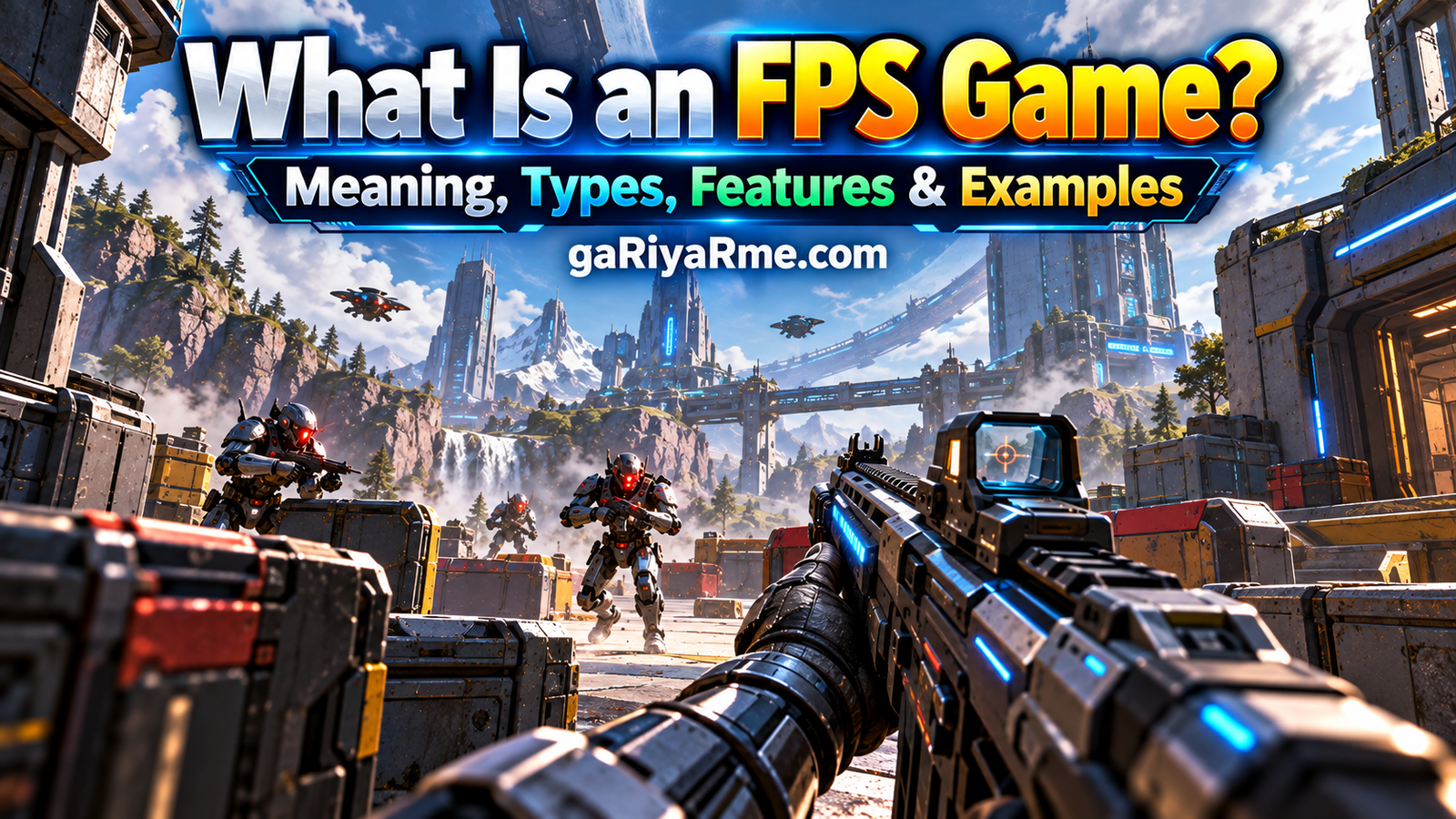
An FPS game, or First-Person Shooter, is a video game that combines a first-person viewpoint with shooting-focused gameplay. Its defining perspective lets players experience the action through the eyes of their controlled character.
The genre includes tactical shooters, arena shooters, military games, hero-based shooters, futuristic adventures, and story-driven campaigns. Popular examples include Counter-Strike 2, Call of Duty, DOOM, Halo, Battlefield, and VALORANT.
Understanding the FPS genre also makes it easier to distinguish first-person shooters from third-person shooters and other types of shooting games.
Whether you enjoy competitive matches, cooperative missions, or single-player stories, FPS games offer a wide range of experiences within the gaming world.
FAQ
What is an FPS game?
An FPS game is a First-Person Shooter video game in which players experience the action through the perspective of the character they control, with shooting as a central gameplay mechanic.
What does FPS stand for in gaming?
FPS stands for First-Person Shooter when referring to a game genre. It can also mean frames per second when discussing a game’s performance.
What are some examples of FPS games?
Popular FPS examples include Counter-Strike 2, Call of Duty, DOOM, Halo, Battlefield, and VALORANT.
What are the main types of FPS games?
Common types include tactical FPS, arena FPS, military FPS, hero-based FPS, sci-fi FPS, and story-driven FPS games.
What is the difference between FPS and TPS?
FPS means First-Person Shooter and generally shows the world through the character’s viewpoint. TPS means Third-Person Shooter and usually shows the character from behind or another external camera angle.
Are all FPS games multiplayer?
No. FPS games can offer single-player campaigns, online multiplayer, cooperative modes, or a combination of these formats.
Is an FPS game the same as a shooting game?
No. An FPS is a type of shooting game that uses a first-person perspective. Shooting games can also use third-person, top-down, side-scrolling, or other camera views.
Why are FPS games popular?
FPS games are popular for their immersive perspective, aiming mechanics, competitive matches, strategic gameplay, teamwork, and variety of settings.
Leave a Reply